
Related Downloads
Related Links
Additional
Overall communication between COPFS and victims of domestic abuse
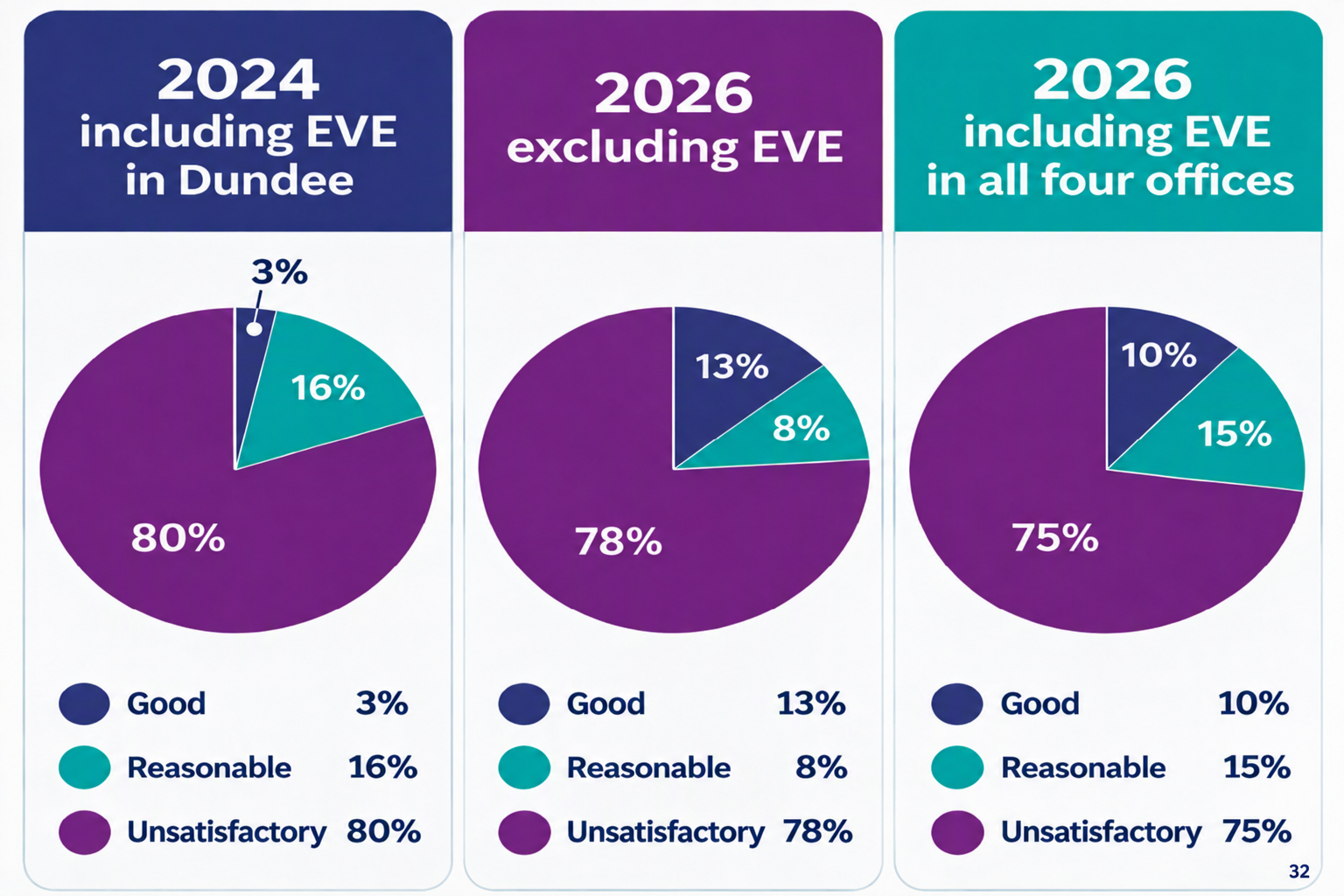
108. In 2024 we recommended that in relation to communicating with victims in summary domestic abuse cases, COPFS should take immediate steps to ensure that victims are receiving basic information about their case, including its outcome, timeously.[33]
109. While there has been some small improvement in communication since our last report, it remains the case that most victims of domestic abuse are not receiving an acceptable standard of service from COPFS and, in particular VIA.
110. In 2026, EVE also contributed to communication with victims. When EVE communication from our case review is taken into account, the overall communication assessments are:
Good: 10%
Reasonable: 15%
Unsatisfactory: 75%
111. EVE improved the overall standard of communication in some cases, raising it from an unsatisfactory to a reasonable assessment. However, in other cases, the absence of EVE communication reduced the overall assessment from good to reasonable. A key issue was that VIA communication was, in many cases, so poor that it could not be remedied by an attempted or completed EVE call by a prosecutor, nor by the small number of cases in which a DASA meeting was offered or conducted.
112. In the small number of cases assessed as demonstrating good communication, there was still evidence of some shortcomings, particularly in the quality of VIA letters, as discussed above. However, we also found examples of VIA officers taking account of victims' needs and engaging directly with them.
Case study
In one DASA case, VIA sought clarification from prosecutors after requesting Police Scotland update the victim on the initial outcome, as no instruction had been provided by the prosecutor on whether the victim should be cited. Once clarification was received, an initial letter was issued. The victim was subsequently updated by telephone following the CMH, with a voicemail left requesting a return call. A further letter was sent after the continued CMH advising of the trial. These were clear and appropriate template letters. Thereafter, VIA promptly issued letters following the acceptance of a plea at trial and again after sentence was deferred and a non-harassment order imposed.
113. We found a clear link between the number of court hearings and our communication assessments. Cases with fewer court callings were more likely to demonstrate positive communication, as there were fewer opportunities for backlogs to develop, updates to be missed, or poor-quality letters to be issued. However, we still found examples of inadequate service in some cases with only a small number of hearings.
Case study
The accused appeared from custody and was remanded pending trial. There was no evidence that VIA attempted to telephone the victim after the accused's first court appearance; instead, Police Scotland was asked to provide an update. An initial letter was issued the day after the custody appearance. No EVE call was attempted. Due to COPFS policy, VIA was not required to update the victim following the intermediate diet. The accused pled guilty at trial, resulting in only three court hearings. VIA issued a letter three days after the trial advising the victim of the non-harassment order. However, the letter did not mention the custodial sentence that had also been imposed, and the explanation of the non-harassment order was unclear. The victim later contacted COPFS to seek clarification regarding the sentence. The final letter also referred to the victim by the wrong name.
114. We also found that victims who proactively contacted COPFS often received a poor standard of service. Responses were frequently delayed or absent, and information provided by victims was not always taken into account as cases progressed. Several such cases were assessed as unsatisfactory, relevant case studies are provided below.
115. A recurring theme in 2024 was lengthy backlogs in VIA work.[34] Such backlogs remained prevalent in our current inspection.
116. Staff in three of the four offices reported significant backlogs, which some described as "overwhelming" and "demoralising". We heard that some VIA officers relied on letters rather than telephone calls because they could process more cases in less time. Our case review identified updates issued weeks or months after hearings, and in some cases no updates at all. Staff told us that delays had become so significant that some VIA officers chose not to issue updates they considered no longer relevant. As a result, victims were not always receiving the timely updates to which they were entitled. There has been little change since 2024.[35]
117. As part of the VMP, COPFS introduced the VIA Workload App (the App) to bring VIA work into a single system, support workload management and provide management information on caseloads. The App was piloted in February 2025 and has since been rolled out nationally.
118. At the time of our inspection, use of the App was inconsistent across offices. Although intended to replace local diary systems and provide a single platform for managing VIA work, some offices continued to rely on local methods.
119. In one office, overtime had been used to eliminate backlogs before the App was introduced. This included overtime for legal staff to carry out VIA work. Early in our inspection period this office reported that backlogs had been eliminated as a result. We learned that four weeks later a backlog of a week had grown due to staff absence.
120. VIA staff consistently reported that current resourcing levels and the prioritisation of first appearance updates made backlogs inevitable. Annual leave and staff absences were said to exacerbate delays and make recovery difficult. We heard of a recurring pattern of using overtime to reduce backlogs at the end of the financial year. Reliance on overtime risks masking underlying resourcing issues and can mean victims receive updates only when additional resource becomes available.
121. While the App is a positive development, its benefits will only be realised if it is used consistently across all offices and the information it generates is actively monitored and acted upon. We were advised that senior managers are not using the management information available from the App. This lack of oversight places additional pressure on VIA staff and, more importantly, risks failing victims of domestic abuse.
122. We found there to be a significant deterioration in the standard of communication as cases progressed with clear evidence that VIA is prioritising communication following first appearance to the detriment of subsequent updates.
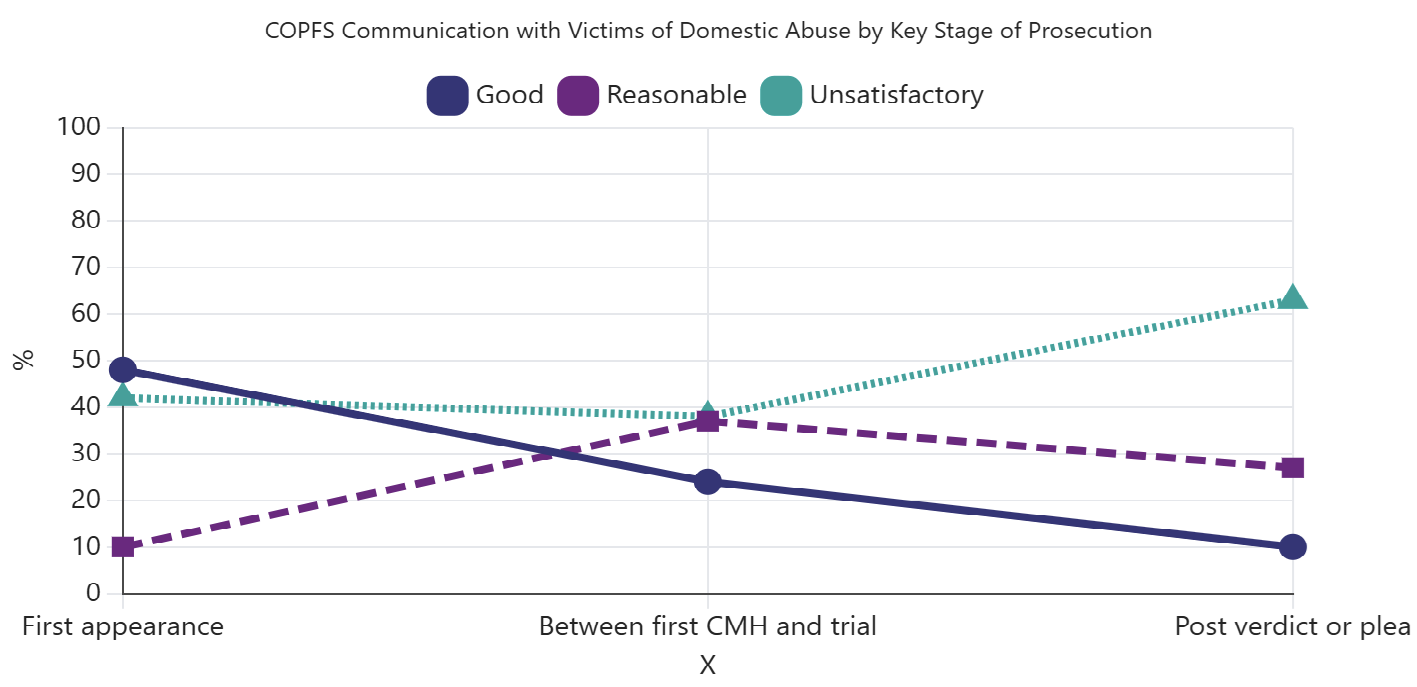
123. To inform our overall assessment of communication we assessed the standard of communication between COPFS and victims of domestic abuse at three key stages in the life of each case:
After first appearance at court by the accused
Between the CMH[36] and the trial
Post verdict or plea
Communication After First Appearance
124. Following the accused's first appearance in court, VIA should advise victims of the outcome of the hearing including whether the accused was granted bail, and the nature of any bail conditions imposed on the same day. In our 2024 report,[37] we made a recommendation that COPFS should work with justice partners to ensure this happens. Implementation of this recommendation is one of the key considerations of this focused follow-up inspection.
Did VIA telephone victims on the same day as the accused’s first court appearance?
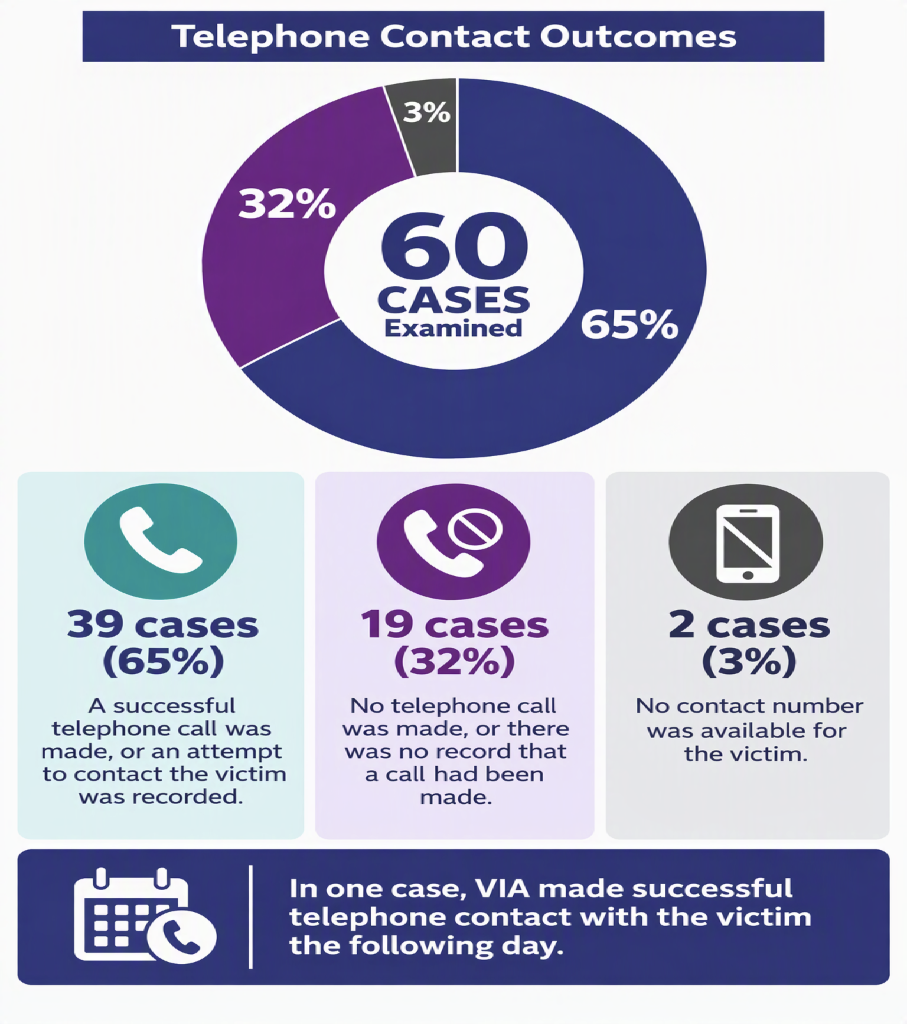
125. COPFS has committed to VIA telephoning domestic abuse victims to provide this information. In 2024, if VIA was unable to contact a victim, Police Scotland was asked to make contact instead. In order for Police Scotland to carry out welfare checks as part of their support to victims this referral from COPFS to the police now happens in every domestic abuse case. From a victim safety perspective, it is vital that victims are informed promptly following the accused's first appearance in court so that they know whether the accused has been remanded in custody or is at liberty and what bail conditions have been imposed for their protection. Given the potential risk to victims, and the likelihood that many will be anxiously awaiting this information, we wanted to know whether there had been any improvement since our 2024 inspection.
126. Overall, we found an improvement in communication following first appearance. During interviews, we were reassured that VIA teams place a strong emphasis on making these calls following the accused's first court appearance. This work was prioritised daily. Unlike some other aspects of victim communication, it was not significantly affected by backlogs. We also gained a clear sense that VIA officers recognised the importance of ensuring victims receive this information. Since our 2024 report there has been a move towards VIA making this contact on the same day as the court hearing as we recommended.[38]
127. However, an issue identified in our 2024 report remains unresolved. COPFS guidance and public-facing protocols remain inconsistent as to whether VIA officers should contact victims on the same day as the first appearance or within 24 hours of the accused appearing in court. COPFS must provide greater clarity about what is expected and ensure that practice is aligned with victim safety considerations.
128. As in 2024, we encountered different understandings by VIA officers regarding whether they should wait until court results have been "validated" on the SCTS Criminal Online Portal before advising victims, or whether they may rely on information contained in the prosecutor’s court minutes, either alone or together with corresponding unvalidated information from the portal.
129. It is disappointing that this fundamental lack of consistency has not yet been addressed by COPFS since our 2024 inspection. The reality of this lack of clarity means geographical inequality for domestic victims across Scotland.
Police contact
130. At the request of Police Scotland, VIA now provide details of all summary domestic abuse cases calling in court on a particular day, regardless of whether contact has been made with the victim by COPFS. This information is provided to Police Scotland using an AD75 form.
131. The AD75 forms are sent each day to Police Scotland. Local policing resources are then tasked to attend the victim's address. In addition to updating the victim on the court outcome, officers will check whether the accused has returned to the property where bail conditions prohibit this and will assess whether the victim is safe. These checks should be carried out within 24 hours. If they remain outstanding, they are passed onto the next police shift until completed.
132. We examined cases to determine whether this information had been passed to the police and whether there was an effective COPFS audit trail. In 36 of 60 cases (60%), the VIA minute sheet recorded that this action had been taken and there was a supporting audit trail.
133. Of the 24 cases where there was no record on the VIA minute sheet that the case had been referred to the police, we found a corresponding entry on the AD75 form in nine cases. In 11 cases the AD75 records were insufficient to allow us to determine whether the information had been passed to the police. In four cases, there was neither an AD75 entry nor an entry on the VIA minute sheet recording an attempted call to the victim. Our inspection was hindered by inconsistent naming conventions used by VIA officers both in and across offices.
134. Another example of inconsistent approach was that the Glasgow office operated a different process by using a separate "contact sheet" for recording telephone contact with victims following first appearance. These records are completed instead of updating the VIA minute sheet. The contact sheets are not uploaded to the case management system. Unfortunately, it was often unclear from these records whether a VIA officer had successfully spoken to the victim.
135. We also identified significant variation in the completion of AD75 forms, both between offices and between individual VIA officers within offices. The form requires completion of key information which was not always achieved. It was also uncommon to see important information recorded in the notes section, including whether VIA had successfully informed the victim of the bail conditions. This information would be of benefit to Police Scotland.
136. There should be further discussion between COPFS and Police Scotland about the information VIA should record on AD75 forms to ensure that officers carrying out victim welfare checks are fully informed. COPFS should standardise completion of the form by VIA officers nationally. From a risk management perspective, COPFS should also recognise and address that there is currently no audit trail confirming whether Police Scotland has successfully informed the victim.
Initial communication – letters
137. In our case review, VIA created an initial letter to the victim in 53 of the 60 cases examined (88%), a slight increase from the 84% recorded in our 2024 report. The initial letter is VIA's first written communication with the victim and contains important information, including an explanation of VIA's role, the victim's right to choose whether to receive further contact, their preferred method of communication, and details of available support services. Where relevant, the letter also explains any bail conditions imposed on the accused at their first court appearance. As the letter provides victims with a written record of measures put in place for their protection, it is important that it is issued promptly. In the remaining seven cases (12%), no initial letter was generated.
138. During our case review we noted initial letters for victims following the first appearance by the accused, are being created promptly by VIA officers. 91% of these letters to victims were created on the same day or the day after the first appearance. There is a risk that this prompt work could be undone by delays in posting letters as previously described.
Overall assessment of initial communication
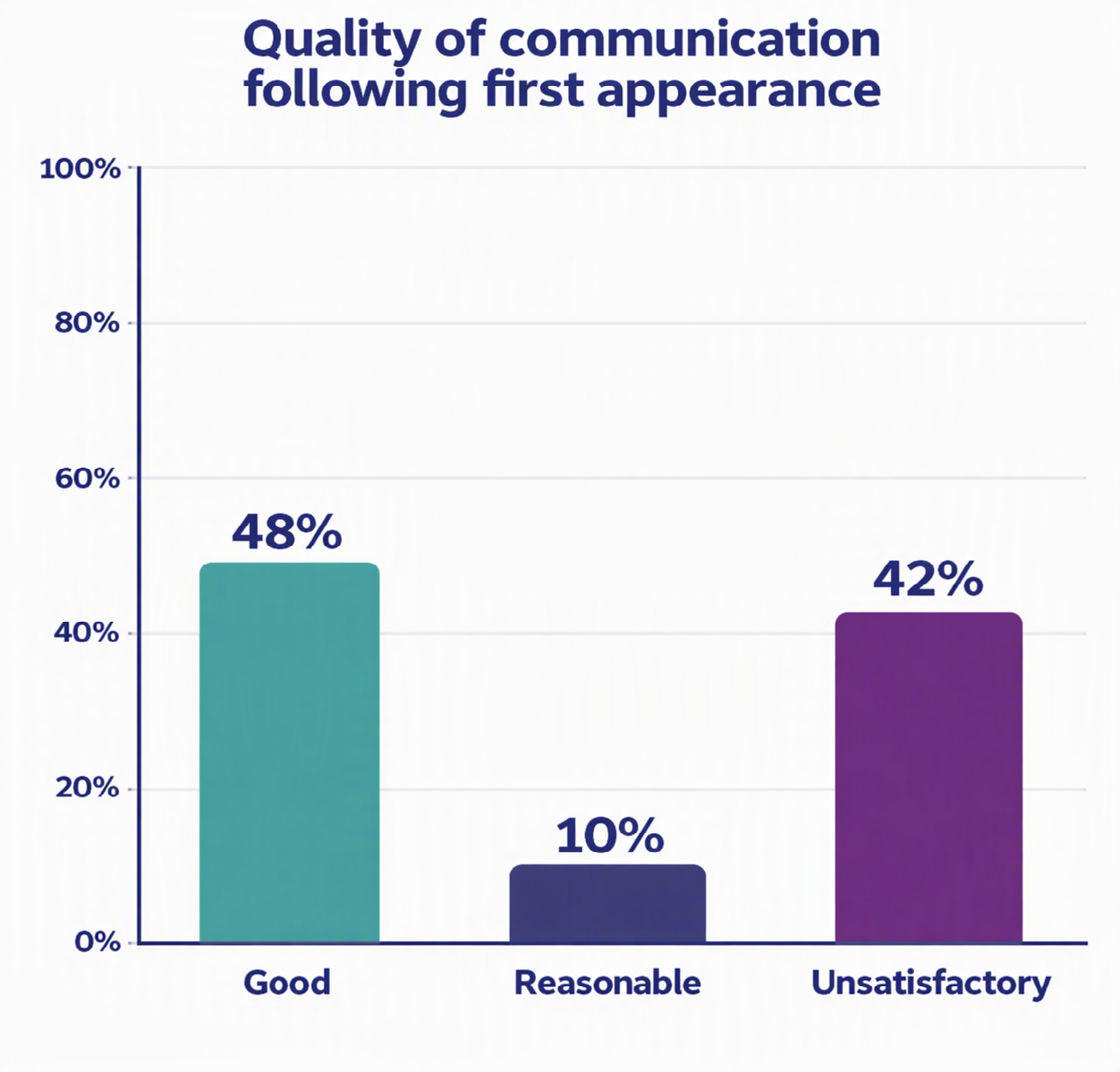
139. Where we assessed communication as "good", this reflected cases in which VIA achieved, or came close to achieving, the expected standard of service. This included when VIA made successful contact or attempted a telephone call following first appearance, referred the case to Police Scotland on the same day, and issued an accurate, or substantially accurate, initial letter to the victim. This is the minimum standard.
140. We concluded that 42% of victims received an unsatisfactory standard of communication following first appearance. An example of this is:
Case study
The first calling date of an undertaking case was changed several times. The victim repeatedly contacted COPFS by email to express their views about the prosecution, prior to a prosecutorial marking decision being made. The case was overlooked entirely by VIA until it had called in court on four occasions.
The victim received no communication following first appearance and the police were not informed to make contact. The victim was not advised of the bail conditions imposed in the case, nor informed that these special conditions had later been removed following a bail hearing. VIA first contacted the victim only after a trial diet had been fixed. No apology was made for the previous lack of communication. Two separate letters were generated on the system by different VIA officers. One contained incorrect information advising that the victim should not attend the trial diet. It is unclear which letter, or if both, were sent to the victim.
141. The initial communication required following first appearance is not a complex process. It involves three key actions: contacting the victim by telephone, notifying Police Scotland and issuing an accurate initial letter. It is therefore disappointing that in 52%[39] of cases either this minimum standard was not achieved or there was insufficient evidence available to demonstrate that it had been achieved.
Communication between the first CMH and the trial
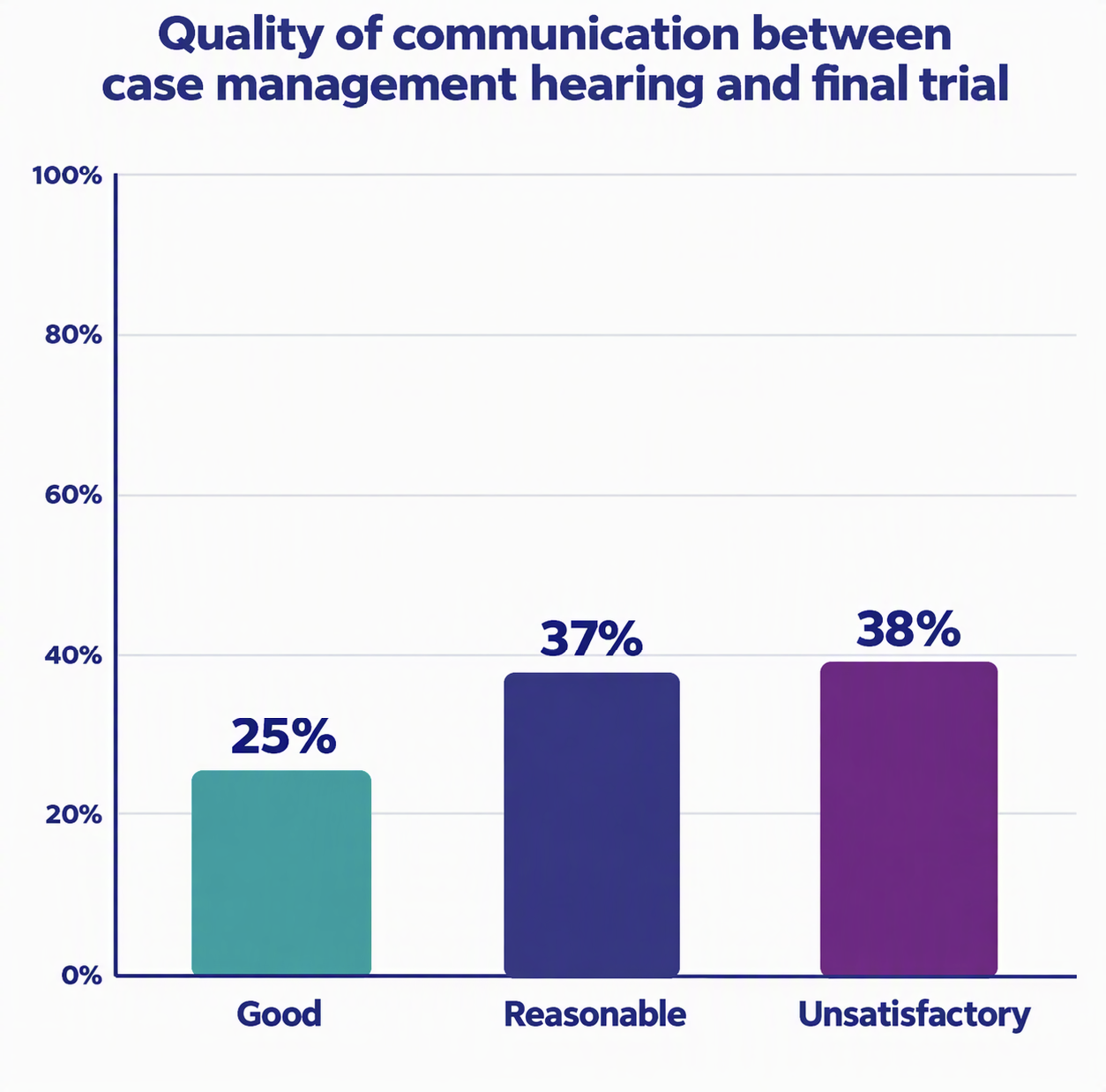
142. A recurring issue that often resulted in an unsatisfactory assessment was the failure to update victims following CMHs.[40] We found numerous examples where victims had been told they would receive an update after a CMH but were not subsequently provided with any information.
143. Across the 60 cases reviewed,[41] there were 145 hearings between and including trial assignment and trial that were not final trial diets. Evidence that the outcome had been communicated to the victim was found in 84 instances (58%). In the remaining 61 hearings (42%), victims were not updated, either because of COPFS policy or because the required update was not provided. We were aware of the change in COPFS policy to communication after CMHs and did not negatively assess communications affected by that change.
144. Other recurring issues that contributed to negative assessments included victims repeatedly contacting Enquiry Point for information that should have been provided by VIA, and the use of poor-quality VIA letter templates, as discussed above.
145. The period between first appearance and trial is critical to maintaining victims' confidence in the prosecution process, particularly in domestic abuse cases where there is a recognised risk of victim disengagement. We observed an apparent correlation between poor communication and victims disengaging from the prosecution.
Case study
A victim contacted VIA after receiving an initial letter. They provided an email address and telephone number and asked to be updated after every court appearance. No update was provided after the first CMH. No EVE call was made by a prosecutor. The victim then called to seek an update, clearly seeking support. They called again on the day of the second CMH stating how much of an impact the prosecution was having and expressing a lack of confidence in the system. The victim received a standard VIA letter advising that a trial had been fixed. The victim did not attend the trial and there was no further communication from COPFS. They also failed to attend a second trial. A plea was accepted to charges other than the domestic abuse reported. A VIA letter was issued two weeks after the second trial which did not inform the victim that a not guilty plea was accepted to the domestic abuse charges. This final letter was poorly drafted with incorrect headings throughout and was unsigned.
146. While COPFS is committed to informing victims following an accused's first appearance in court whether the accused is at liberty and of any bail conditions imposed, the same priority is not given to subsequent changes in bail conditions or to the release of an accused from custody as a case progresses. During our case review, we found examples where special bail conditions had been removed, meaning there was no longer a condition preventing the accused from entering the victim's property or contacting the victim. In some of these cases, the victim did not receive a telephone call or a letter within a reasonable timescale to advise them of the change. Given the backlogs in processing court outcomes, other than at first appearance, outlined above, there is a risk that victims may not be informed of such significant developments for several weeks, if at all.
147. This risk is heightened where an accused is held in custody and subsequently released during the course of proceedings. Current VIA processes do not provide a mechanism to ensure that victims are informed of such a release on the day it occurs. We identified an example of this during our case review.
Case study
A trial took place on 24 September, following which the accused was released from custody. No attempt was made to inform the victim of the release at that time. The case was not reviewed by VIA until 2 December, when a letter was generated. As a result, there was no contact with the victim between the initial correspondence following the accused's first appearance and several months after the conclusion of the trial.
148. We heard of excellent practice by one VIA officer who routinely checks cases where an accused has been remanded in custody on the day of each court calling to ensure that the accused has not been released. COPFS should, as a minimum, require VIA staff to adopt this practice in order to reduce the risk to victims and ensure they are informed promptly of any change in the accused's custodial status.
Communication post-verdict, plea and sentencing
149. We assessed communication between COPFS and victims of domestic abuse after the final trial diet:
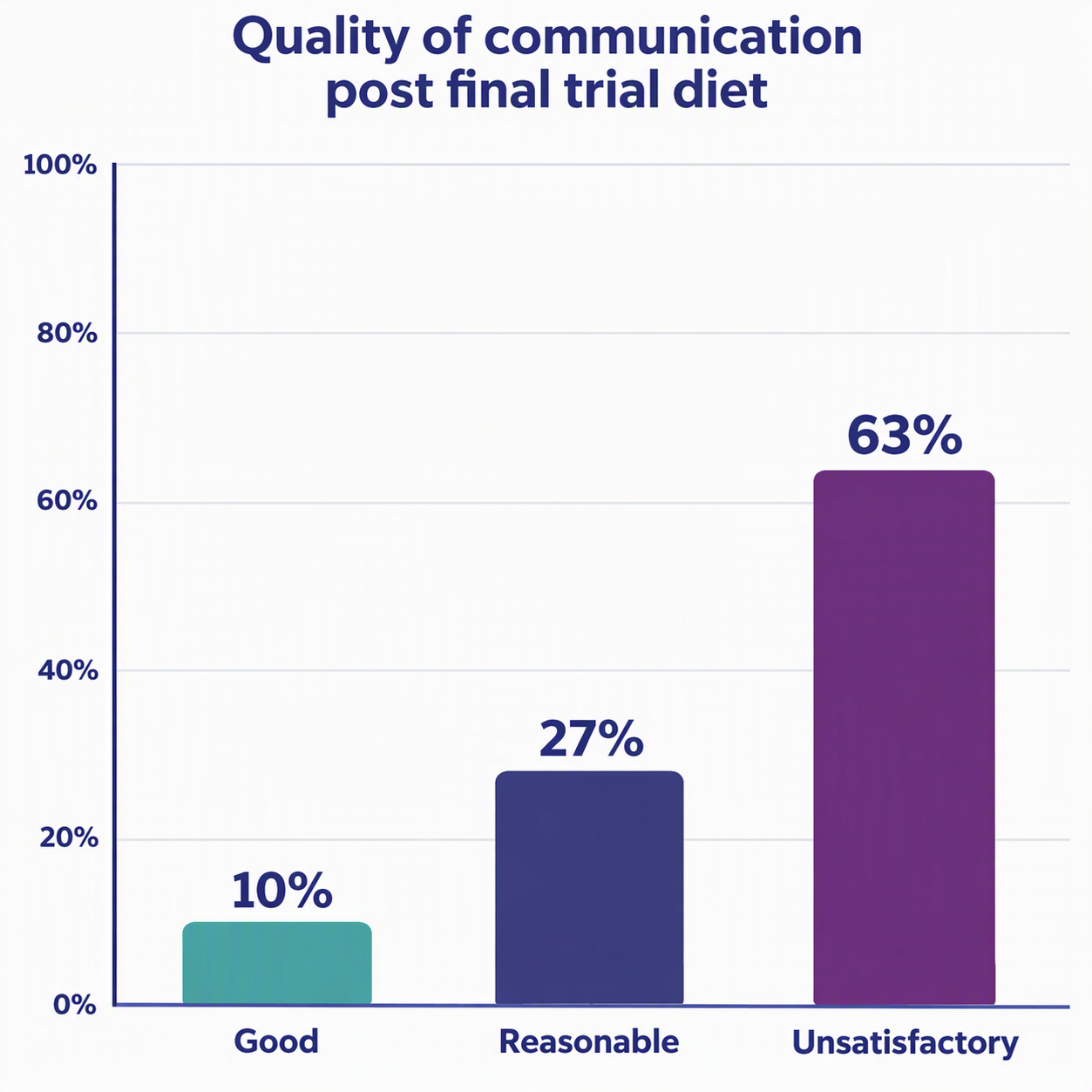
150. Communication with victims was weakest following a verdict, plea or sentencing. This appears to be linked to VIA case backlogs, which often worsened as cases progressed. We frequently found no VIA correspondence following trials or deferred sentences and, in some cases, it appeared that communication with the victim had ceased after they had been advised a trial was set.
151. Across the cases reviewed,[42] there were 87 hearings from the final trial onwards. We found evidence that victims had been notified of the outcome in 38 instances (44%). In the remaining 49 hearings (56%), victims were not updated, either because of COPFS policy[43] or a failure to communicate.
152. Although responsibility for notifying victims of the imposition of a non-harassment order rests with SCTS, we found that COPFS often took no steps to ensure this important information, which is critical to victims' ongoing safety, was communicated timeously.
153. While COPFS focus on communication following first appearance is both necessary and commendable, particularly when considered through a risk lens, inconsistent communication throughout the life of a case can pose significant risks. We found many examples where bail conditions were removed at trial[44] but this was not communicated promptly, or at all, by VIA. As a result, victims may mistakenly believe they remain protected by bail conditions and make decisions about their own safety planning that are based on a false premise.
Guidance
154. VIA staff reliance on local desk instructions on when and how victims of domestic abuse should be contacted remains unchanged since 2024.[45] We would have hoped that by now clear instruction to VIA officers on this most fundamental of processes had been issued. It is astonishing that there is no national document that sets out a standardised process for communication at each stage of a domestic abuse case. None of our interviewees could tell us of the existence of such guidance and explained that they tended to rely on local desk instructions. Almost all interviewees would welcome such guidance.
155. We found that the inconsistency of approach was not just between offices but between VIA officers within offices. One notable example was the contrast of the use of voicemail. In one office we noted VIA minute sheets repeatedly referring to ‘voicemails being left’ when a victim had not answered a call. At interview other VIA officers advised that they would never leave a voicemail due to security and welfare concerns. COPFS guidance to prosecutors on arranging EVE calls suggests voicemails should be left but case specific information should not be provided. It was also clear across our case review that some VIA officers were more prepared to try and provide an update by telephone than others.
156. The consequence of a lack of clear national guidance resulted in a level of service that was worse than a postcode lottery for victims of domestic abuse with VIA officers following their own policies on when a call should be made or letter sent and how the template should be amended. We noted with VIA that the only consistency was inconsistency. We found that this extended to all VIA communication with victims.
Reduction of the VIA workload
157. We noted various attempts by COPFS to mitigate the strain on VIA staff. Some of these were designed to free up time to deliver better communication; however, some have reduced the level of service to victims.
158. From 27 June 2025 legislation[46] allowed for a semi-automated process for the transmission of vulnerable witness notice applications to courts. The benefit for VIA staff is that in most cases they no longer require to manually produce a vulnerable witness notice and then have it signed by a prosecutor. We reported in 2024 that this was a significant source of backlogs. We heard a variety of views from VIA staff on the new procedure with most suggesting that it had freed up significant resources.
159. Prior to the rollout of SCM almost all cases had an intermediate diet assigned. One of the principles of SCM is that intermediate diets should only be assigned in bail cases where the presiding sheriff feels it necessary. Despite this, intermediate diets continue to be assigned, repeatedly in some cases. In our review of 60 cases there were 25 intermediate diets assigned in 18 cases. Intermediate diets must be assigned when the accused is remanded in custody. Of the 25 intermediate diets assigned 16 took place when the accused was not remanded in custody. The VIA communication model is designed around SCM and CMHs. COPFS needs to do more to ensure that EVE or basic communication does not fail when an intermediate diet is assigned.
160. We are aware of longstanding COPFS policies that:
if an intermediate diet is continued to another intermediate diet without a plea or change to the accused’s bail conditions that VIA do not require to notify the victim about the continued calling of the case
victims are not contacted when a case is deferred further for sentencing if there is no substantive change e.g. further reports are required
161. A similar approach has now been adopted in CMHs. In our case review we assessed 12% of cases as falling under such COPFS policies of not requiring victims to be updated. This percentage is likely to increase substantially due to a further change in approach to CMHs.
162. This policy change on communication in some CMHs occurred during our case review period. COPFS amended its template letters, moving from a commitment to update victims after CMH to providing updates only where there had been a change in the accused's plea or another significant development, such as a change to bail conditions. This represents a significant reduction in communication with victims. This change is particularly important given the evidence that court churn, previously concentrated around intermediate diets and trials, has increasingly shifted to CMHs.[47] This is an issue COPFS may wish to explore further. For many victims, the result is longer periods with little or no information about their case, which is inconsistent with a trauma-informed approach.
163. We learned that the decision to reduce communication at the CMH stage was driven by the inability of summary VIA teams to keep pace with demand, resulting in the backlogs and communication failures discussed above. While intended to manage workload pressures, the change reduces the level of service provided to victims. We are unaware of any consultation with victims or third sector organisations on whether this approach meets the needs of domestic abuse victims. Third sector organisations acknowledge that victims would benefit from receiving updates during repeated court continuations rather than experiencing lengthy periods with no information.[48]
164. During our inspection, we found that victims often experienced long periods with little or no communication from VIA or the wider COPFS throughout the lifecycle of a case, creating what could be described as "communication deserts". These gaps in communication were particularly evident during periods involving multiple continued CMHs or deferred sentencing hearings.
Case study
In one case, there were 11 court hearings over an 11-month period, including five trial diets. Despite the length of the case, the victim received updates from VIA on only three occasions. The first was the initial letter. There were two subsequent CMHs for which no updates were provided, despite the commitment to do this outlined in the initial letter. A letter was issued following the first trial diet, but it was sent three weeks late. Thereafter, the victim received no further communication from VIA for six months, until a letter was sent following a plea at a trial diet. This letter advised that sentencing had been deferred and that the victim would be informed of the final outcome. This did not occur.
165. As we have noted, by contrast, there was a strong focus on communication at the outset of a case, including contact from the police, a VIA telephone call following the first court appearance, an initial letter, contact from an advocacy or support service, and an EVE call from a prosecutor. While this level of engagement is commendable, it can result in victims receiving repeated information and may create expectations of ongoing contact that clearly VIA cannot sustain throughout the case journey. COPFS may wish to consider the victim's experience across the entirety of the case journey and identify opportunities to provide regular updates, either through VIA or by exploring automated means.
166. Given the ongoing failures to provide victims with timely communication and case updates, as highlighted throughout this report, COPFS should consider practical options to address these issues as a matter of urgency.